Guides · 29 October 2026
Storing a Piano When a Period or Listed Property Is Being Renovated | PianoStorage
A period property renovation is its own category of building project. It shares the dust, vibration and humidity disruption of any major refit, but it adds specific complications that push the exposure to a piano much further. The materials being removed are older and in many cases more hazardous. The consent process for listed buildings can pause the work without warning and at any stage. Original features that give the house its character require careful dismantling and often specialist trades, which means more people on site for longer. And the pianos that tend to live in period houses are often older instruments with aged glue joints that are closer to their tolerance than a modern instrument would be.
Why lathe and plaster creates a different dust problem
Most of the risk calculations around building work and pianos are calibrated around modern plasterboard. Plasterboard is cut with a saw and finished with a skim, and the dust it produces, though genuinely fine, is what contractors and building owners have come to expect. Lathe and plaster, which covers the original walls and ceilings in Victorian, Edwardian and earlier Georgian properties, is a fundamentally different material to demolish.
Victorian lathe and plaster consists of thin timber laths nailed across the wall framing, with three successive coats of lime-based plaster applied over them. The base coat was typically mixed with horsehair or animal fibre to bind it as it cured. When this is stripped from walls during a period renovation, the demolition produces an extraordinarily fine dust: old lime carbonates, dried horsehair fibres, generations of accumulated organic matter and powdered pigment from original distemper and lead-based paints. This dust does not settle on flat surfaces the way construction grit does. It stays airborne for hours and moves through the whole building with the air currents that follow contractors in and out of rooms.
Inside a piano action, this material is worse than ordinary building dust. The felt hammer heads, key bushings and bridle straps are sized for the tolerances of a functioning action mechanism. Fine organic particles, particularly those with fibre components, compact into the felt more tenaciously than gypsum and are harder for a technician to clean out fully. A piano left in a period house during a full strip-back renovation is likely to need a thorough action clean before it plays well again, at the minimum. In a worse case, the mechanism needs regulated after cleaning to restore an even touch.
How listed building consent affects the project timeline
If the property is listed, the consent process adds a layer of timing uncertainty that a modern build does not have. Listed building consent is required before any work that affects the character of the protected structure, including the removal of original internal features, changes to windows, alterations to structural elements or the removal of original floor surfaces. An application submitted alongside planning permission may be approved at the same time. Or it may be referred to the local heritage officer, trigger a consultation period, be approved in part and deferred in part, or result in conditions that require further specification before the relevant element of the work can proceed.
In practice, this means a listed property renovation can pause partway through. A contractor arrives to begin stripping a ceiling and discovers original decorative plasterwork that requires a heritage assessment before it can be touched. An application for a replacement window in a particular style is referred for further consultation. The structural work in one part of the building completes and then waits while the consent for the next phase is confirmed. A project that was quoted as running for twelve weeks can still be on site eighteen months later because the property is being worked through in consented phases rather than as a single continuous programme.
A piano does not benefit from those pauses. During the intervals between active work phases, the building is still an open, partially completed structure. Humidity from exposed walls and disconnected heating systems continues to cycle. Dust already raised does not disappear when the contractors step back. The piano sits in conditions that are not a functioning home and not a building site: somewhere in between, and in that in-between state for as long as the consent process requires.
Vibration in older structures
Period properties built in solid masonry, either solid brick or stone, conduct structural vibration differently from timber-framed or cavity wall construction. There is no cavity to absorb energy. The mass of the walls means vibration from impact tools travels further through the structure before it attenuates. An SDS hammer drill working on a partition in an Edwardian terrace puts vibration into the ground floor of the same building just as effectively as it puts it into the room next door.
Original suspended timber floors, where the boards are laid directly on joists with no screed layer, transmit vibration longitudinally along the floor very efficiently. A piano standing on original floorboards is connected to every hammer blow in the property through those boards. The effect on the tuning pins is gradual and cumulative: the friction grip in the pinblock loosens incrementally over weeks. A piano that was well in tune when the renovation began will need more than a standard single visit to come back to pitch by the end. If the instrument is older, and period houses disproportionately house Victorian and Edwardian uprights rather than modern instruments, aged glue joints in the soundboard and bridges are more vulnerable to this stress than new ones would be.
Access and collection from a period property
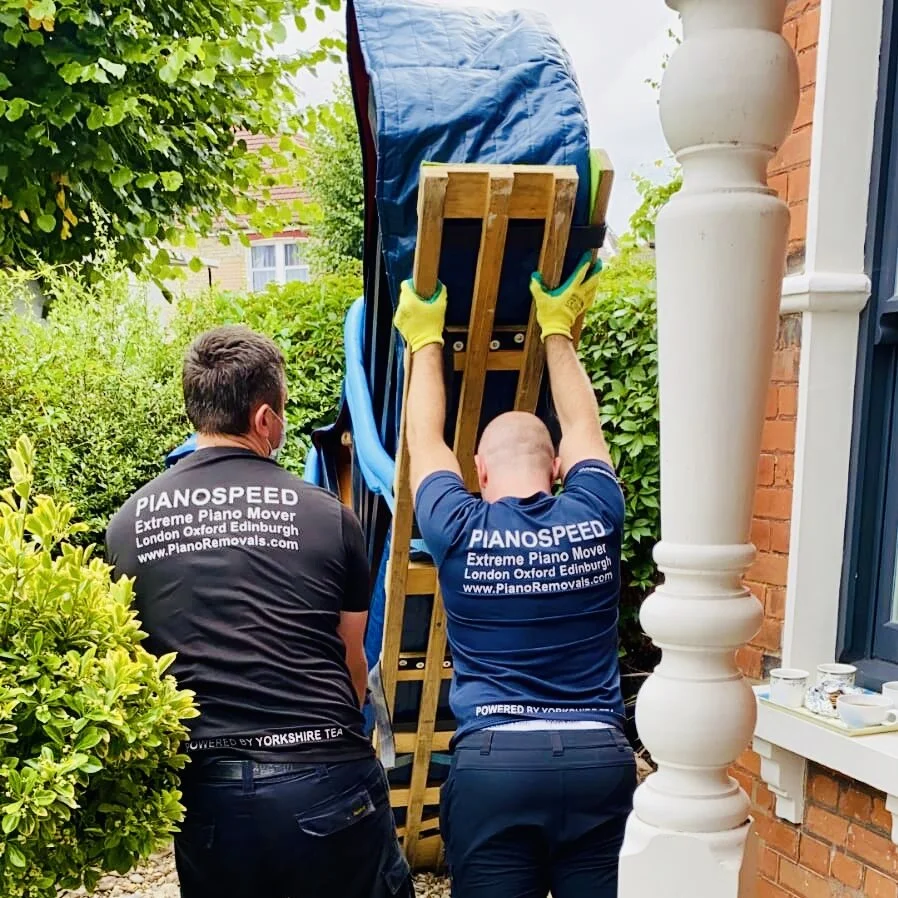
Period houses present their own collection challenges, which are worth thinking through before booking. Original staircases in Victorian townhouses are often steeper and narrower than modern building regulations permit. Tight turns on the half landing, low ceilings at the first-floor level and original banisters that cannot be damaged are all factors the crew needs to know about in advance. A piano on the first floor of a Georgian town house will typically need a different rigging approach from one at ground level in a new-build flat.
Original flagstones, encaustic tiles and period timber floors at the entrance also need to be noted. The crew works with protection and will flag any surface risks when they survey the route, but giving them the relevant details at the point of booking means the right equipment comes on the day and there are no surprises at the doorstep. If the property is in a conservation area with parking restrictions, or if the street is narrow enough to require a formal suspension of parking bays, that is worth arranging before the collection day. Tell us the street and we can advise on what is typically required in that area.
- Climate-controlled facility at 15 to 21 degrees Celsius and 45 to 55 percent relative humidity throughout the storage period
- No fixed term: the piano stays for as long as the renovation and consent process requires
- Specialist crews experienced with original staircases, narrow hallways and period access constraints
- Full insurance from collection through to re-delivery
- Round-the-clock monitored security at the facility
- Part of the Pianospeed Group, serving GB mainland and Belfast
Timing collection around the project
The right moment to arrange collection is before the first phase of stripping work begins. Lathe and plaster demolition in particular should not happen while the piano is in the building. If work has already started and the piano is on site, contact us with the postcode and access details and we will confirm the next available day for that area.
When the renovation is complete, re-delivery should wait until the plaster has fully cured and the room has been heated and ventilated for at least a week. Lime-based renders and modern finishing plasters used in period property restoration both release moisture as they cure, and introducing an acoustic instrument into a room that is still drying can undo the benefit of storage. The piano stays in store at the same rate for as long as that additional settling period requires, and comes back when the room is genuinely ready.
Does storing the piano require listed building consent?
No. Removing a piano from a listed building is not a notifiable alteration to the structure. Listed building consent covers work that affects the fabric or character of the protected building: moving furniture and instruments is outside its scope. If you are uncertain about any aspect of the work being done to the property, your local planning authority or a heritage consultant can advise.
The renovation has already started and been paused waiting for consent. Can collection still happen?
Yes. Contact us with the postcode and access details and we will confirm the next available collection day for that area. If the property is partially stripped and the access route is affected by building materials or temporary works, tell us what the situation is when you enquire and we will confirm whether any additional planning is needed for the collection. Getting the piano out of an already disrupted environment is the priority.
Is lathe and plaster dust genuinely worse for a piano than modern plasterboard dust?
The two are different in composition and in what they do inside an action. Modern plasterboard dust is primarily calcium sulphate. Lathe and plaster demolition produces old lime carbonates mixed with organic fibres from the binding material in the original coats. The fibres compact into felt more tenaciously than gypsum particles and are harder for a technician to clean out fully. The age of the dust, and the presence of original distemper and pigment from earlier decoration, adds further organic content to what settles on hammer heads and key felts. The result is typically a more serious contamination than a modern plasterboard strip would produce.
The piano is a Victorian upright. Is an older instrument at more risk during a period renovation than a modern one?
Older instruments are generally more vulnerable to sustained humidity cycling and structural vibration than modern ones, because their glue joints, soundboard and action components have already aged. An instrument made in the 1890s that has survived in good condition has done so partly because it has spent its life in reasonably stable conditions. A period renovation is an extended period of instability. Whether the extra risk is decisive depends on the instrument's condition and value, but the argument for getting it out of the property is stronger for a Victorian upright in good original condition than it would be for a more recent instrument.
The property is in a conservation area with parking restrictions. How does collection work?
Tell us the street and postcode when you enquire. In many conservation areas the local authority can issue a suspension of parking bays for loading: some local authorities process these within a few days, others require a week or more. We can advise on what is typically required for the area. If the street is too narrow for a standard vehicle, we will discuss the logistics with you and confirm whether a smaller specialist vehicle is the right approach.
How long can the piano stay in storage if the listed building consent process delays the project?
There is no maximum term. The piano stays in store at the same weekly rate for as long as the project takes, whether that is three months or two years. When the renovation is finished and the room has settled, you book the re-delivery. The only thing that changes as the time extends is the accumulated weeks of the storage period at the agreed rate.
Will my heritage or contents insurance cover the cost of specialist piano storage during a listed building renovation?
This depends on your specific policy. Some heritage property insurance products include cover for the storage of sensitive contents during a substantial renovation, and some standard contents policies cover piano storage as an extension of the home contents cover. It is worth checking with your broker before you book. We can provide a dated collection record, a description of the instrument's condition at pickup, and a cost breakdown of the storage period, all of which support a claim if storage is an eligible expense under your policy.
Store your piano the right way
We collect, protect and re-deliver. You only pay for the time you use.
Get an instant price★★★★★ Rated 4.9 out of 5 on Trustpilot from 77 reviews