Guides · 31 August 2026
Storing a Piano When a Second Home Sells or Lets | PianoStorage
A piano at a second home often ends up there by accident. The family moved it out of the main house during a renovation and never moved it back. A parent retired to a cottage and the piano followed. Someone inherited a property that already contained one. However it arrived, the instrument becomes part of the fabric of the place, and when the decision is made to sell or let the second property, it needs a plan of its own.
The piano at a second home is different from the one at a primary residence in a simple and practical way: you are less often there to notice problems, less well placed to organise access at short notice, and often at the end of a conveyancing or letting process before the question of what to do with it has been properly addressed. Storage handles that when it is arranged in advance.
When the second home is being sold
A sale usually requires vacant possession. The piano, if it is not included in the sale, needs to be out of the property before completion. In practice, that means arranging collection well ahead of the final weeks of a conveyancing chain, when dates are shifting and the pressure is on. A piano left in a property at the point the buyers take ownership is an immediate complication, and one that no solicitor wants to manage on completion day.
The alternative that many sellers attempt is moving the piano to the main home or to a family member's property. That works if there is room, a suitable place for it and the move can be planned properly. Often there is not, there is not and it cannot be. A main home that has lived without a piano for several years tends to have no obvious space for one, and an instrument that arrives without warning tends to cause friction rather than pleasure. Specialist storage keeps it out of the way, properly protected and available for re-delivery to wherever the next home turns out to be.
When the second home is going to tenants
A piano in a let property creates a specific problem for landlords and tenants alike. For the landlord, it is a high-value item that most standard landlord insurance policies classify awkwardly. Musical instruments are frequently subject to sub-limits, and a standard tenancy agreement rarely addresses what tenants may and may not do with a piano in the property. The instrument is effectively unsecured.
For tenants, a piano left in the property is an asset they did not ask for and may not want. A household that does not play has a large piece of furniture occupying a significant portion of a room, which they cannot move without specialist help. A tenant who does play will use it. Neither outcome is one most landlords intend to create when they think through what they are letting.
Getting the piano out before the tenancy begins removes the ambiguity entirely. The inventory is cleaner, the insurance position is simpler, and there is no instrument to argue about at checkout. For the landlord, the piano goes into storage on known terms, with clear insurance coverage, and waits until the letting situation resolves or a new home for the instrument is identified.
- Piano removed before the tenancy begins: no inventory disputes at the end of the let
- Full insurance from collection through to re-delivery, with no gaps
- No fixed term: storage continues for as long as the letting does
- Climate-controlled conditions protect the instrument whether storage lasts months or years
- Available for re-delivery to any address on GB mainland and Belfast when the time comes
The condition question at a second home
A piano that has been at a second home for some years may have experienced a range of conditions without anyone realising. A holiday cottage in Scotland, a weekend house in the South West, a rural property with intermittent heating: each of those environments puts a piano through seasonal humidity and temperature swings that accumulate into tuning instability and, in some cases, structural stress on soundboards and glue joints. An instrument that has sat in the corner of a stone cottage for a decade has rarely been in ideal conditions.
Putting it into climate-controlled storage does not reverse existing damage, but it stops further deterioration from the moment it arrives. The facility holds temperature and relative humidity steady throughout the year. After a period of stable storage, a piano technician can assess the instrument properly and the owner can decide whether to restore, rehome or retain it. Making that decision in the calm of a proper storage arrangement is easier than making it in the middle of a sale or the start of a tenancy.
Arranging collection when you are not on site
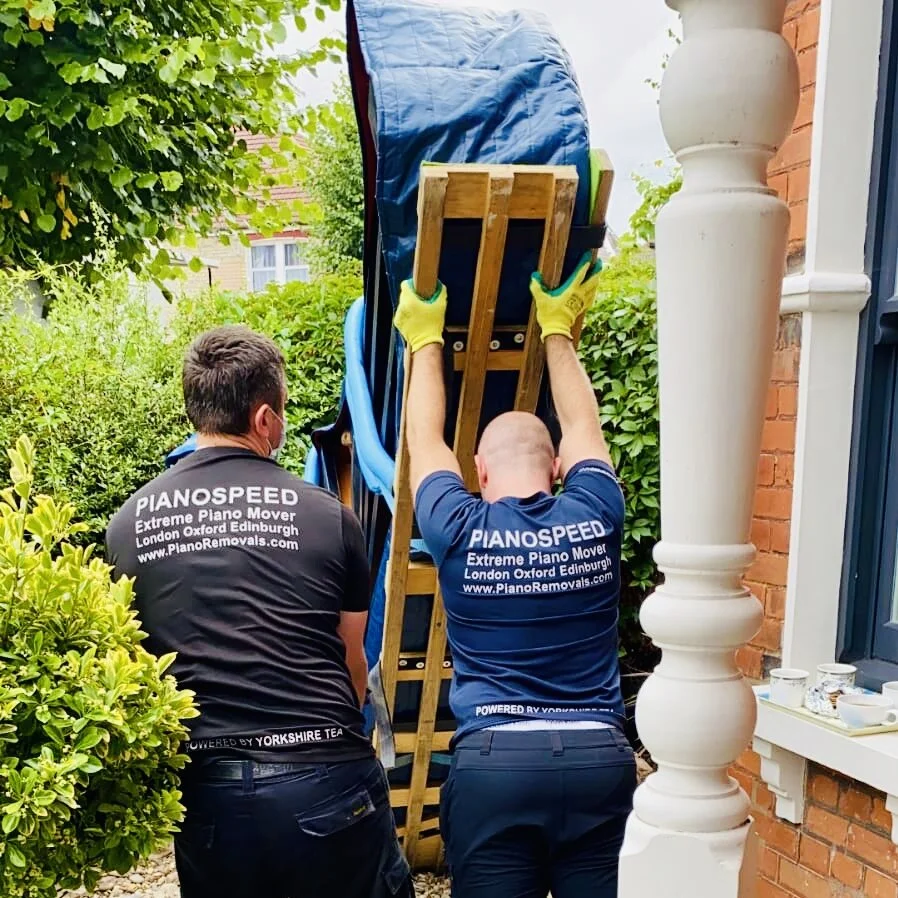
One practical complication with a second home is that the owner is rarely there on a given weekday. You do not need to be present for the collection. A letting agent, an estate agent, a caretaker, a trusted neighbour or any keyholder can give access to the specialist piano crew. When you book, you tell us who will be at the property and we confirm the three-hour collection window directly with that person.
The main things to establish in advance are the floor the piano is on and the nature of any stair access, including whether there is a lift. Stair access is priced clearly in the booking process, agreed before collection day, with nothing added on arrival. If the second home has a particularly narrow staircase, a low ceiling on a landing or an awkward turn, note that at the time of booking so the specialist piano crew arrives with the right equipment and enough time for the job.
Does the piano need to be out before completion or can it stay until after?
Vacant possession on completion usually means the property, including any contents not listed in the sale, must be clear by the day the buyers take ownership. A piano not included in the sale needs to be collected before that date. Arranging storage several weeks in advance is considerably easier than trying to book collection in the final days of a conveyancing chain, when dates can move at short notice.
I do not have room at my main home for the piano. Where does it go?
Into specialist climate-controlled storage, until you decide where you want it next. There is no requirement to have a destination in mind at the point of collection. The piano stays in the facility on a rolling weekly basis, insured and in stable conditions, for as long as you need. When you are ready for re-delivery, you book it to wherever the piano is going.
Can a letting agent or estate agent give access for collection?
Yes. Whoever holds a key to the property and can let our specialist piano crew in on the day is sufficient. You tell us at the time of booking who will be giving access and we confirm the three-hour collection window directly with them. You do not need to travel to the property yourself.
Is a piano left in a let property covered by my landlord insurance?
Most landlord insurance policies apply sub-limits to high-value contents such as specialist musical instruments, and many standard policies are unclear on items that may be used by tenants. The specific terms of your policy govern what cover applies, but it is rarely straightforward for a piano. Putting the instrument into specialist storage provides comprehensive insurance from collection through to re-delivery without that ambiguity.
How long can the piano stay in storage if I am not sure what to do with it yet?
As long as you need. There is no minimum or maximum term. Storage continues on a rolling weekly rate for weeks, months or years. Many owners use the period to consider the options properly, whether that is finding a new home for the piano, having it assessed by a technician, or waiting until circumstances settle. The instrument is safe and properly looked after throughout.
My second home has a steep or narrow staircase. Can the piano still be collected?
Yes. Specialist piano crews carry the right equipment for stair access of all kinds, including steep or narrow staircases, low ceilings and awkward landings. Stair access is priced clearly in the booking, based on the details you provide, and agreed before collection takes place. Nothing is added on the day. Describe the access at booking so the crew arrives properly prepared.
Do I need to prepare the piano before the crew arrives?
No preparation is required on your part. The specialist piano crew wraps and protects the instrument at the point of collection. If there are any existing condition issues worth noting, such as a split in the casework or a known structural concern, mention them at the time of booking so the crew can document the condition on arrival. That record forms part of the insurance documentation.
Store your piano the right way
We collect, protect and re-deliver. You only pay for the time you use.
Get an instant price★★★★★ Rated 4.9 out of 5 on Trustpilot from 77 reviews