Guides · 30 August 2026
School piano storage over summer and Christmas | PianoStorage
A school's piano spends the academic year in regular use: assembly hall performances, music lessons, rehearsals, examinations. Then term ends and the building empties. Over six weeks of summer, or two to three weeks at Christmas, the instrument sits in a room where the heating is off, the windows are closed and nobody checks on it. The conditions inside that room are not kind to a piano.
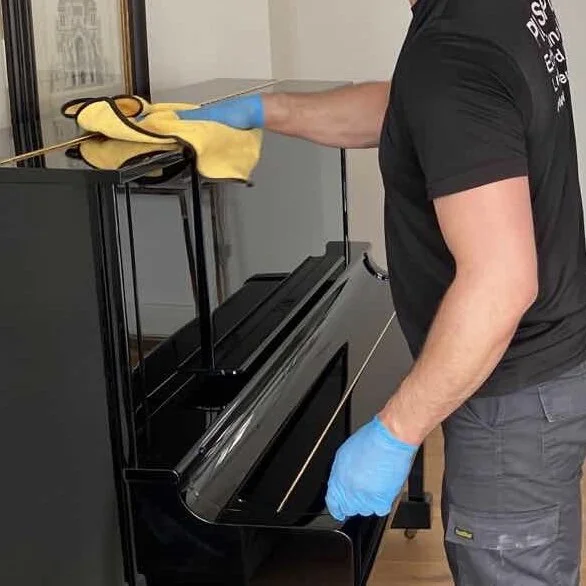
PianoStorage collects from school premises across GB mainland and Belfast. A specialist piano crew arrives at the end of term, wraps the instrument and brings it to a climate-controlled facility for the duration of the break. At the start of the new term it goes back. The piano is in better condition for having been out of the building than it would have been staying in it.
What an empty school building does to a piano
In most schools, the heating system is switched to standby or off entirely when staff and students leave. In an older building, the temperature in an unheated music room or assembly hall can drop significantly over a winter break. A piano that spent the autumn term in a room held at eighteen or nineteen degrees can be sitting in eight or nine degrees by early January. When the heating comes back on in time for the first day of term, the temperature rises quickly. The moisture content of the soundboard and the wooden parts of the cabinet respond to that cycle. The wood expands when it absorbs humidity and contracts when it dries. Each cycle of contraction and expansion puts stress on the glue joints, the bridges and the strings, and the cumulative effect over several years of school holiday exposure shows in tuning instability and structural fatigue.
The summer break creates a different but equally damaging problem. Six to eight weeks of warm weather in an enclosed building pushes humidity upward. A timber-framed assembly hall, a pre-fabricated music block or a Victorian school building with single glazing can all become significantly humid in a British summer. High relative humidity causes a soundboard to absorb moisture and swell, which affects its stiffness and the tonal quality it produces. When the humidity then falls again as autumn arrives, the soundboard dries back out. A piano that is technically in tune when the pupils leave in July may require two or three technician visits to bring it back to a stable playing condition in September.
- Assembly halls and music rooms often have wide temperature swings when unheated
- Timber structures absorb and release humidity with the season
- No daily monitoring means problems are not caught early
- Repeated holiday cycles cause cumulative damage to soundboards and glue joints
- Post-break tuning is costlier and less stable when conditions have been poor
When the school uses the holiday for building work
Many schools plan their renovation and maintenance programmes around the holidays precisely because the building is empty. A hall refit, a new floor, replastering, electrical work or a building extension can all be scheduled for summer or Christmas without disrupting teaching. The piano that is normally against the hall wall becomes a problem: it cannot stay in a room being replastered or sanded, and moving it to another part of the building usually just puts it in the path of the next trade.
Construction dust is a specific hazard for piano actions. The fine gypsum particles produced by plastering and the wood dust from sanding and carpentry work are significantly finer than ordinary household dust. They enter the piano through the gap between the keys and the key slip and settle on hammer felts, key bushings and the action components. The result is an instrument that feels sluggish and uneven to play. Cleaning an action that has been exposed to construction dust is a specialist job that takes time and adds cost to the maintenance budget. Getting the piano out of the building before the trades arrive prevents the problem entirely.
Collection timed around the school calendar
The most practical approach is to arrange collection in the final week of term. We work around the school's schedule: the booking includes the collection date, the collection address, the floor the instrument is on and any access details relevant to the building. For a piano in an assembly hall with a raised stage, or in an upper-floor music room, give those details at the time of booking so the specialist piano crew arrives with the equipment the access requires. Stair access is priced clearly in the booking and agreed before collection day.
If the piano is in a room being handed over to builders on the first day of the holidays, collection can be arranged for the day the term ends. The crew takes the instrument in fitted transit covers to the facility that day, and the trades can start work the next morning on an empty room. When the renovation is finished and the new term approaches, book the re-delivery with the destination address and access details and the piano goes back.
For schools with multiple instruments, we can collect more than one piano from the same site on the same visit. The hall upright and the music department's teaching room piano both need protection over six weeks in an empty building. Give us the number and type of instruments at the time of booking and we plan the visit accordingly.
- Collection in the last week of term, return in time for the new term
- Specialist piano crews experienced with school premises and institutional access
- Multiple instruments collected from one site in a single visit
- Stair access priced clearly in the booking, no additions on collection day
- Site manager or caretaker can give access: the customer does not need to attend
- Part of the Pianospeed Group, with piano-moving experience across GB mainland and Belfast
What the piano gets in storage
The climate-controlled facility holds temperature and relative humidity at stable levels throughout the year. The instrument does not experience the seasonal swings that an empty school building goes through. It is not exposed to construction dust, vibration from power tools or the moisture changes that come with an open, unheated building in winter or a hot, enclosed one in summer. The insurance covers the piano from the moment it is collected to the moment it is back in the school.
When the piano returns at the start of term it will need tuning, as any moved instrument does. But the tuning that follows a period of proper climate-controlled storage is a standard post-move single session, not the extended remedial work that a piano sometimes needs after six weeks in poor conditions. Over the course of several years, that consistency protects both the instrument and the school's maintenance budget.
Can you collect from a school premises and return it at the start of term?
Yes. We collect from schools, academies, colleges and other educational premises across GB mainland and Belfast. The usual approach is collection in the last week of term and return in time for the start of the new term. Give us the address, the floor the instrument is on and any access requirements at the time of booking, and we plan the visit around the school's schedule.
Does the school's own staff need to be present for collection, or can the site manager give access?
The site manager, caretaker or any authorised member of staff can give access. You do not need to arrange for the music teacher or bursar to be on site. Tell us at booking who will be giving access and we confirm the collection window directly with them.
How is stair access at the school priced?
Stair access is charged per flight and the amount is shown clearly in the booking before you confirm. Nothing is added on the day. Give us the floor the piano is on, whether there is a lift and a brief description of the staircase, including any tight turns or low ceilings on the route. The specialist piano crew arrives equipped for the specific access.
Can you collect more than one piano from the school in the same visit?
Yes. If the school has multiple instruments, we can collect them in a single visit. Give the number and type of pianos at the time of booking so the visit is planned with the right crew and the right equipment for the instruments involved.
Is the piano insured while it is in storage?
Yes. Full insurance covers the instrument from the point of collection, throughout the storage period, and until re-delivery is complete. The cover is included and does not need to be arranged separately.
Do we need to do anything to prepare the piano before the crew arrives?
No. The specialist piano crew carries out all wrapping and protection at the point of collection. If the piano has any existing condition issues worth noting, mention them at booking so the crew can document the condition on arrival. The school does not need to arrange any preparation work beforehand.
Will the piano need more than one tuning when it returns at the start of term?
A piano that has been in climate-controlled storage typically needs a single tuning session after it is moved back, which is standard practice after any move. A piano that has spent the same period in an unheated school building may need more extensive work to bring it back to a stable pitch. The difference in tuning cost over several years is itself an argument for proper holiday storage.
Store your piano the right way
We collect, protect and re-deliver. You only pay for the time you use.
Get an instant price★★★★★ Rated 4.9 out of 5 on Trustpilot from 77 reviews